Picasso & Einstein Where Art Meets the Infinite

Picasso & Einstein

Where Art Meets the Infinite

Latest Articles

The Productive Void: How Embracing Ignorance Became the Secret Engine of Genius
Science & Culture

The Productive Void: How Embracing Ignorance Became the Secret Engine of Genius

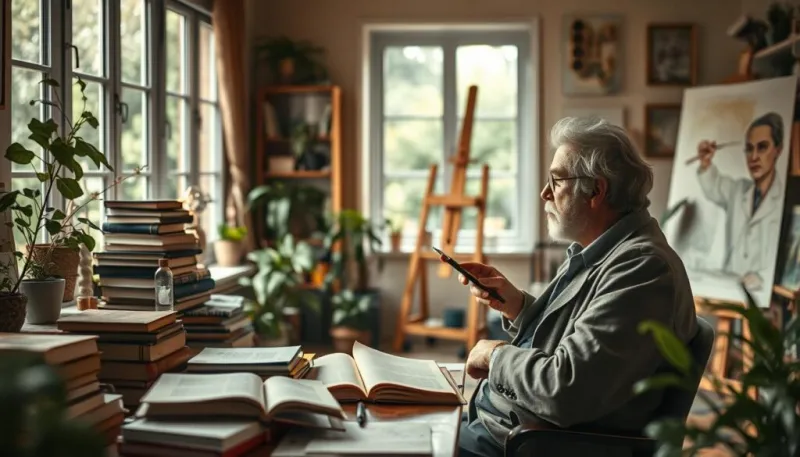
The most transformative figures in both science and art have shared a counterintuitive habit: they made a discipline of not knowing. From Richard Feynman's celebrated admission of bewilderment to Mark Rothko's refusal to resolve his own canvases, intellectual humility has quietly powered some of history's greatest breakthroughs. In an era that rewards confident expertise over honest uncertainty, this piece argues that the willingness to say 'I don't know' is not a confession of failure but the f
Beyond the Eye: How Science's New Map of Perception Is Rewriting the Rules of Art
Art & Technology

Beyond the Eye: How Science's New Map of Perception Is Rewriting the Rules of Art

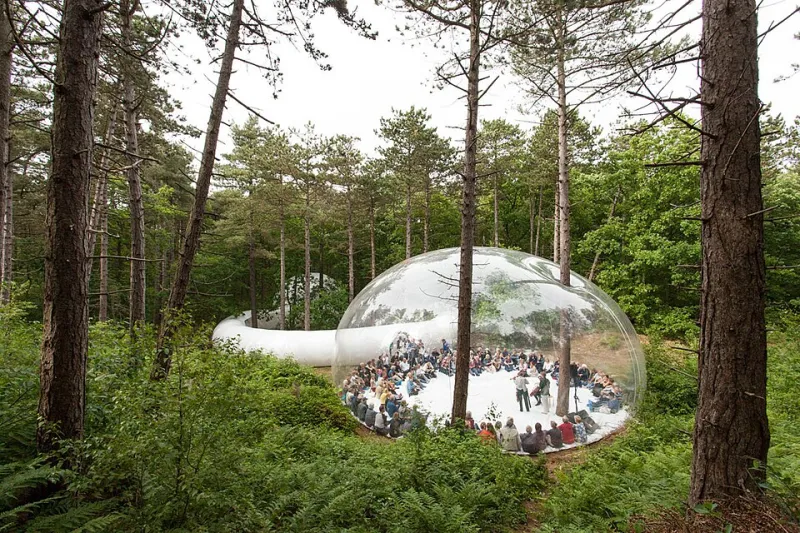
For centuries, Western art has operated under a quiet tyranny: the assumption that vision is the primary, and most legitimate, pathway to aesthetic experience. Emerging research in embodied cognition and multisensory neuroscience is dismantling that assumption with remarkable speed. Contemporary artists, armed with these scientific findings, are building works that speak directly to the body — through touch, taste, smell, and proprioception — in ways that are expanding what art is even capable o

In the Margins of the Magnificent: The Hidden Art Lives of Scientific Notebooks
Science & Culture

In the Margins of the Magnificent: The Hidden Art Lives of Scientific Notebooks

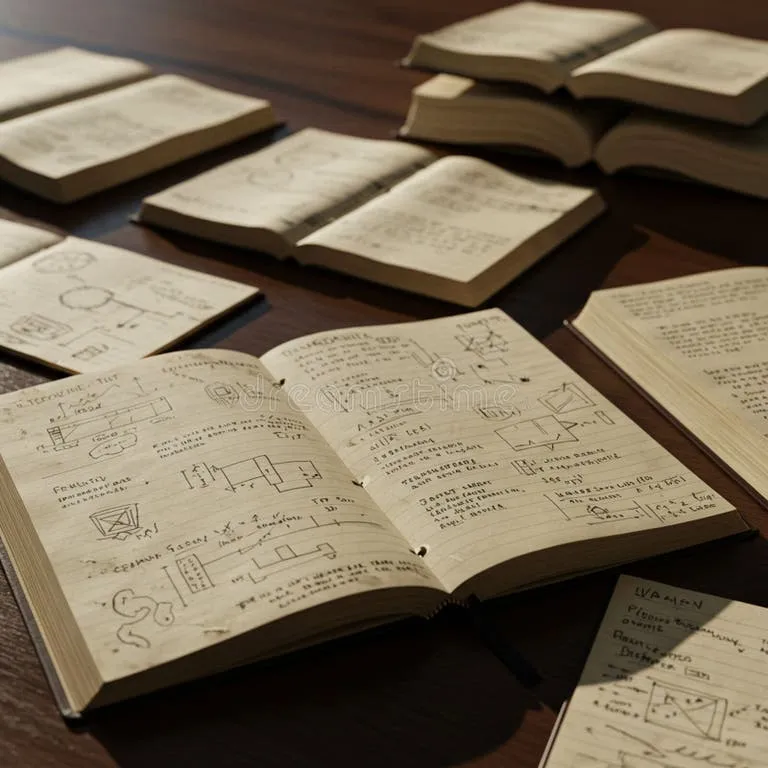
The great scientific notebooks of history have always contained more than science. Tucked between equations and observations, in the white space where rigorous thought pauses to breathe, are doodles, sketches, and visual improvisations that reveal something essential about the creative mind — and something deeply inconvenient for anyone who insists on keeping art and science in separate rooms. These marginal marks are not distractions from serious work. They are serious work, wearing different c

The Virtue of the Gap: How Incompleteness Became Art's Most Radical Argument Against Science
Art & Technology

The Virtue of the Gap: How Incompleteness Became Art's Most Radical Argument Against Science

Science treats every unanswered question as a wound requiring suture; art treats the same wound as a window. Across centuries of practice, visual artists have not merely tolerated ambiguity — they have weaponized it. This article examines why the deliberate gap, the unresolved form, and the withheld answer represent not artistic failure but a philosophical position that science, by its very nature, cannot afford to share.

Truth Is a Poor Muse: On the Necessary Dishonesty of Great Art
Science & Culture

Truth Is a Poor Muse: On the Necessary Dishonesty of Great Art

When artists distort scientific fact, they are not failing — they are succeeding at an entirely different task. This piece examines why emotional truth and empirical truth are not merely different languages but sometimes mutually exclusive ones, and what that irreconcilable tension reveals about the distinct ways art and science construct meaning.

Neither Here Nor There: How Quantum Uncertainty Is Dismantling the Grammar of Visual Art
Art & Technology

Neither Here Nor There: How Quantum Uncertainty Is Dismantling the Grammar of Visual Art

A growing cohort of contemporary artists is borrowing quantum mechanics' most unsettling principle—that a thing can exist in multiple contradictory states simultaneously—and embedding it directly into the visual field. The result is a body of work that refuses resolution, punishes the eye's search for equilibrium, and reframes aesthetic discomfort as the point rather than the problem. This is composition theory at the edge of physics.

Before Newton Had Words for It: How Renaissance Painters Cracked the Code of Human Vision
Art & Technology

Before Newton Had Words for It: How Renaissance Painters Cracked the Code of Human Vision

When Filippo Brunelleschi stood before the Florence Baptistery with a painted panel and a mirror, he was not merely making art — he was conducting an empirical experiment in the physics of light and perception. Centuries before formal optics had a scientific vocabulary, Renaissance artists were mapping the geometry of human sight with a precision that would later astonish the scientists who claimed the territory as their own.

Mimicry Without Motive: What AI Forgeries Reveal About the Soul of Artistic Intent
Art & Technology

Mimicry Without Motive: What AI Forgeries Reveal About the Soul of Artistic Intent

Generative AI can now reproduce the brushwork of Rembrandt, the color logic of Rothko, and the compositional grammar of Hopper with unsettling precision. Yet something fundamental remains absent from every pixel-perfect imitation — the irreducible human motive that transforms technique into meaning. What these flawless forgeries inadvertently expose may be the most important truth about art that technology has ever accidentally told us.

The Flaw That Fascinates: How Science Measures Beauty and Art Refuses to Agree
Science & Culture

The Flaw That Fascinates: How Science Measures Beauty and Art Refuses to Agree

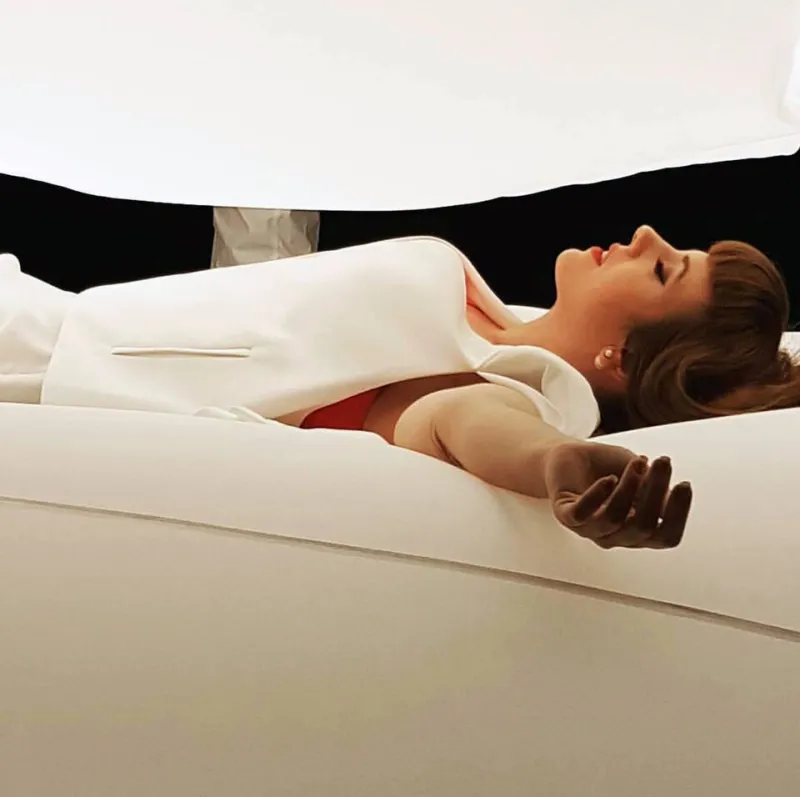
Evolutionary biology has long championed symmetry as the gold standard of physical attractiveness, encoding centuries of aesthetic preference into a single measurable ratio. Yet artists, neuroscientists, and cultural critics are mounting a compelling counter-argument: that the human face at its most captivating is rarely the one that cleaves perfectly down the middle. The places where the body departs from mathematical precision may be precisely where beauty begins.

Chaos by Design: How Controlled Randomness Became the Secret Language of Beauty
Art & Technology

Chaos by Design: How Controlled Randomness Became the Secret Language of Beauty

From Jackson Pollock's drip canvases to the branching logic of a river delta, beauty seems to emerge most powerfully not from deliberate composition but from probabilistic processes we barely understand. Scientists and artists are now converging on a startling hypothesis: our brains may be hardwired to find stochastic patterns irresistible. What does that mean for how we define creativity itself?

Unresolved by Design: How Artists Are Turning Scientific Uncertainty Into a Creative Manifesto
Art & Technology

Unresolved by Design: How Artists Are Turning Scientific Uncertainty Into a Creative Manifesto

A new generation of American artists is drawing deliberate inspiration from Heisenberg's uncertainty principle and chaos theory, treating incompleteness not as aesthetic failure but as the most rigorous form of honesty available. Rather than reaching for resolution, these creators are building works that hold contradiction in permanent suspension—and audiences, it turns out, are profoundly drawn to the tension. This piece examines why unresolved meaning has become one of contemporary art's most

The Architecture of Forgetting: When Neuroscience and Installation Art Build Spaces That Remember for Us — Badly
Science & Culture

The Architecture of Forgetting: When Neuroscience and Installation Art Build Spaces That Remember for Us — Badly

A new wave of collaborations between cognitive neuroscientists and installation artists is producing environments that do not merely represent memory — they enact its failures. These immersive spaces, designed with input from memory researchers, disorient visitors in ways that are scientifically precise and emotionally profound, forcing a confrontation with the unsettling gap between how we believe we remember and how we actually do.

Signal Without Warmth: How Digital-Age Artists Are Mapping the Geometry of Human Isolation
Art & Technology

Signal Without Warmth: How Digital-Age Artists Are Mapping the Geometry of Human Isolation

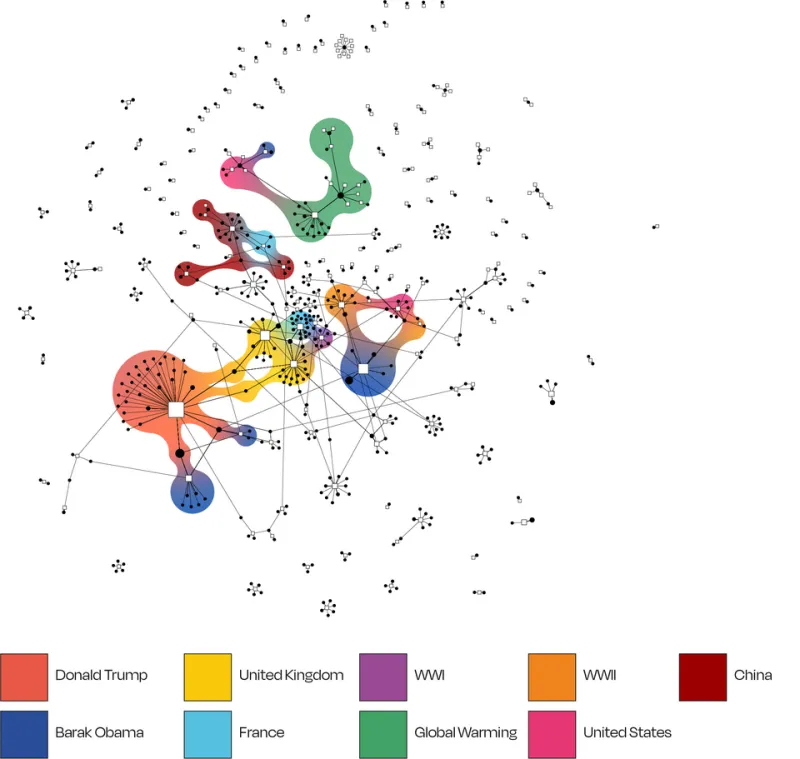
Contemporary artists are borrowing the cold vocabulary of data science — network graphs, loneliness indices, social connectivity metrics — to render something profoundly intimate: the experience of being alone in a crowd. The paradox is stunning. The very tools designed to quantify human connection are becoming the instruments through which artists expose its failures.

When Systems Break Open: The Hidden Chaos Behind Every Artistic and Scientific Revolution
Science & Culture

When Systems Break Open: The Hidden Chaos Behind Every Artistic and Scientific Revolution

The history of human creativity—whether measured in brushstrokes or equations—is not a smooth upward curve but a jagged record of long silences punctuated by explosive transformation. Complexity science and chaos theory offer a startling framework for understanding why breakthroughs in art and science so often arrive not incrementally but all at once, reshaping entire fields overnight.

The Cold Perfection Problem: When Algorithmic Architecture Forgets the Human Soul
Art & Technology

The Cold Perfection Problem: When Algorithmic Architecture Forgets the Human Soul

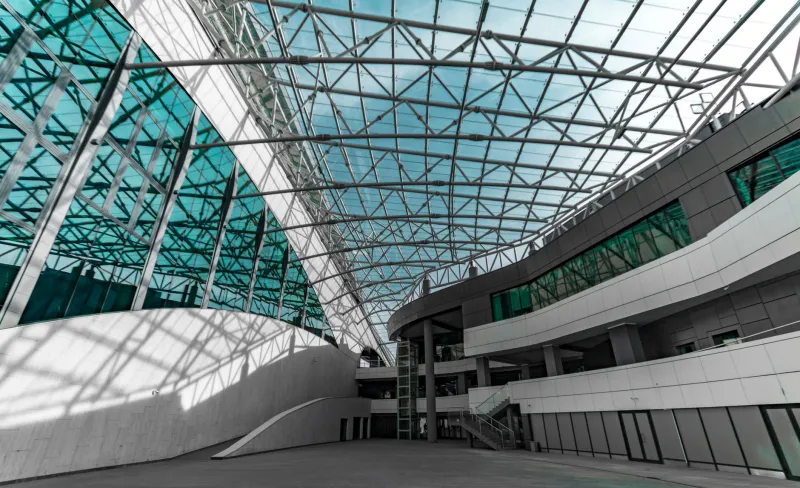
Contemporary architecture has never been more technically accomplished—or more emotionally remote. As computational design tools and optimization algorithms reshape the built environment, a growing chorus of critics and artists is asking whether the relentless pursuit of structural perfection has quietly evacuated meaning from the spaces we inhabit.

Designing the Sublime: How Neuroscience Is Quietly Reshaping the American Museum Experience
Art & Technology

Designing the Sublime: How Neuroscience Is Quietly Reshaping the American Museum Experience

A new generation of museum architects and curators is turning to cognitive science—studying how the brain processes space, light, and sequence—to deliberately engineer the conditions under which visitors encounter art. The results are transformative and, to some critics, unsettling. When a gallery is optimized for wonder, does the wonder remain authentic?

In Praise of the Unanswerable: Why Art's Stubborn Purposelessness Is Its Greatest Strength
Science & Culture

In Praise of the Unanswerable: Why Art's Stubborn Purposelessness Is Its Greatest Strength

In an era defined by algorithmic optimization and data-driven efficiency, art persists as a magnificent refusal to solve anything at all. This is not a flaw in its design—it is the entire point. Exploring the works of Duchamp, Agnes Martin, and contemporary conceptual artists, we argue that art's deliberate embrace of ambiguity constitutes one of the most radical intellectual acts available to human beings.

The Infinite Edge: How Fractal Mathematics Is Reshaping the American Design Imagination
Art & Technology

The Infinite Edge: How Fractal Mathematics Is Reshaping the American Design Imagination

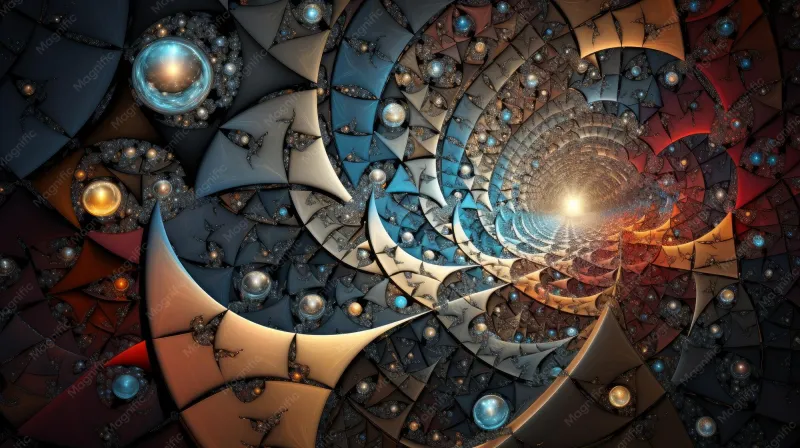
When Benoit Mandelbrot first published his theory of fractal geometry in the 1970s, he was offering mathematicians a new language for describing the irregular, self-similar patterns embedded in coastlines, clouds, and living tissue. Few anticipated that his equations would eventually migrate into the studios of painters, the drafting tables of architects, and the pattern libraries of fashion designers across the United States. Today, fractal thinking is quietly revolutionizing how American artis

Painted Sound: How Synesthetic Artists Translate the Invisible into the Visible
Science & Culture

Painted Sound: How Synesthetic Artists Translate the Invisible into the Visible

For a small but remarkable group of artists, color is never merely color, and sound is never merely sound — the two arrive together, inseparable and vivid. Synesthesia, the neurological phenomenon in which one sensory pathway involuntarily awakens another, has quietly shaped some of the most radical artistic movements in modern history. From Wassily Kandinsky's revolutionary abstractions to today's immersive digital installations, the synesthetic mind offers a rare window into the fluid boundari

Beyond the Brain Scan: Why Aesthetic Love Defies Every Equation
Science & Culture

Beyond the Brain Scan: Why Aesthetic Love Defies Every Equation

Neuroscience has mapped the neural pathways of pleasure and charted the brain's response to symmetry, color, and form—yet the deepest question of why a particular painting stops us cold remains stubbornly unanswered. The gap between measurable neural activity and the lived experience of beauty is not merely a technical problem awaiting a smarter instrument; it may be the most human gap of all. This article examines what science genuinely illuminates about aesthetic preference, and what it must,