The Flaw That Fascinates: How Science Measures Beauty and Art Refuses to Agree
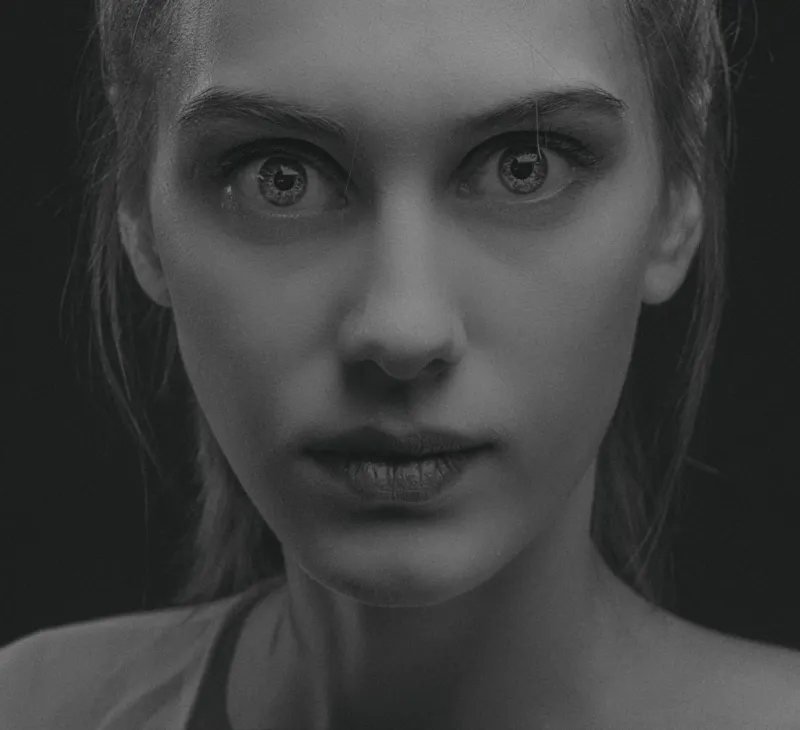
There is a particular kind of photograph that circulates periodically on social media — the kind where a portrait is digitally mirrored along its vertical axis to produce two versions of a face: one composed entirely of the left side, one of the right. The result, almost without exception, is unsettling. The "perfect" faces produced by this exercise look less like people and more like masks. Something essential — some quality that resides in the original's asymmetry — has been erased in the pursuit of balance.
This is the symmetry paradox in miniature: the very standard that evolutionary science has proposed as the foundation of human attractiveness, when applied rigorously, produces faces that no one actually finds beautiful.
What the Biologists Measured
The scientific case for symmetry as a beauty standard is not without substance. Researchers in evolutionary biology and behavioral genetics have argued for decades that bilateral symmetry — the degree to which the left and right halves of a face or body mirror one another — functions as an honest signal of developmental stability. The reasoning is elegant in its logic: organisms that develop under conditions of genetic stress, disease, or environmental disruption tend to accumulate small asymmetries over time. A highly symmetrical face, on this account, advertises a history of robust development, good genes, and resistance to pathogen load.
Studies conducted across diverse cultures have found measurable correlations between facial symmetry and ratings of physical attractiveness, lending the hypothesis a kind of cross-cultural authority. It has been cited in psychology textbooks, popularized in documentaries, and occasionally weaponized by cosmetic surgeons marketing their services as a path toward biological optimization.
The story, however, becomes considerably more complicated the moment it leaves the laboratory.
The Neuroscience of the Imperfect
More recent work in cognitive neuroscience and perceptual psychology has begun to complicate the symmetry narrative in ways that feel almost like vindication for every artist who ever deliberately introduced a crooked line. Research suggests that the human visual system does not process faces as static geometric objects to be measured against an ideal template. Instead, the brain appears to be exquisitely tuned to deviation — to the small departures from expectation that make a face readable as a specific person rather than a category of person.
Neuroimaging studies have indicated that regions of the brain associated with social cognition and emotional recognition respond more robustly to faces that carry the marks of lived experience: the slight droop of one eyelid, the asymmetrical set of a jaw, the way a particular smile pulls harder to one side. These are not flaws that the brain tolerates despite its preference for symmetry. They are, it appears, precisely the features through which identity and emotional depth are communicated.
The scar, the birthmark, the face that has been shaped by decades of habitual expression — these are not deductions from beauty. They may be among its primary sources.
What the Painters Always Knew
Long before neuroscientists began mapping the brain's response to imperfection, portraiture had already staked its claim on asymmetry as the territory where character lives. Rembrandt's late self-portraits, unflinching in their documentation of aging and physical irregularity, have endured not despite their refusal of idealization but because of it. The face that looks back from those canvases is one that has accumulated time, and that accumulation is inseparable from the work's emotional authority.
Chuck Close, the American painter whose monumental photorealist portraits reduce the human face to a grid of chromatic information, has spoken at length about the way extreme magnification reveals a landscape of asymmetry and texture that conventional beauty standards would classify as defect. His subjects do not look perfect. They look present — hyperspecifically themselves in a way that no symmetrically idealized portrait could approximate.
In contemporary fashion photography, a similar resistance has been building for years. Photographers such as Nick Knight and Harley Weir have consistently sought out faces that carry what might be called productive strangeness — features that resist easy categorization, that introduce a slight friction between expectation and perception. The fashion industry's relationship with conventional beauty has always been more ambivalent than its critics acknowledge; the most enduring editorial images tend to be those in which something is slightly, productively wrong.
The Cultural Weight of Deviation
It is worth noting that the cultural valuation of asymmetry and imperfection is not a recent Western invention. The Japanese aesthetic concept of wabi-sabi — broadly understood as the beauty found in transience and imperfection — has for centuries oriented an entire tradition of visual and material culture around the crack in the glaze, the irregular edge, the object that bears the evidence of its own making. The kintsugi practice of repairing broken ceramics with gold-laced lacquer, rendering the fracture lines visible rather than concealing them, is perhaps the most direct aesthetic rebuke imaginable to the evolutionary biology of symmetry: it proposes that the break is not a diminishment of the object but an addition to its meaning.
American culture has historically been less comfortable with this proposition. The beauty industry, the cosmetic surgery market, and the filtered visual economy of social media platforms have collectively invested enormous resources in the project of symmetrical approximation. Yet even here, there are signs of shift. The growing visibility of models and public figures who decline to conceal scars, vitiligo, or other departures from conventional symmetry represents not merely a political statement about inclusion but an aesthetic argument — a claim that the face marked by particularity is more interesting, more human, and ultimately more beautiful than the face that has been smoothed toward an algorithmic mean.
Where Measurement Ends and Meaning Begins
The tension between scientific measurement and aesthetic experience is, of course, one of the oldest problems in the philosophy of beauty, and the symmetry debate does not resolve it. What it does illuminate is the degree to which any single metric — however empirically grounded — tends to collapse under the pressure of actual human perception.
Einstein, famously, believed that the universe operated according to principles of elegant simplicity. Picasso, equally famously, spent his career systematically dismantling the conventions of visual representation in order to make room for something more honest. The symmetry paradox sits precisely at the intersection of those two impulses: the scientific desire to identify a universal principle, and the artistic insistence that reality is always stranger, richer, and less reducible than any principle can contain.
The body, it turns out, is a better artist than the biologists gave it credit for. Its asymmetries are not failures of development. They are, in the most literal sense, the marks of a life — and the face that carries them most visibly may be the face that is most worth looking at.