The Architecture of Forgetting: When Neuroscience and Installation Art Build Spaces That Remember for Us — Badly
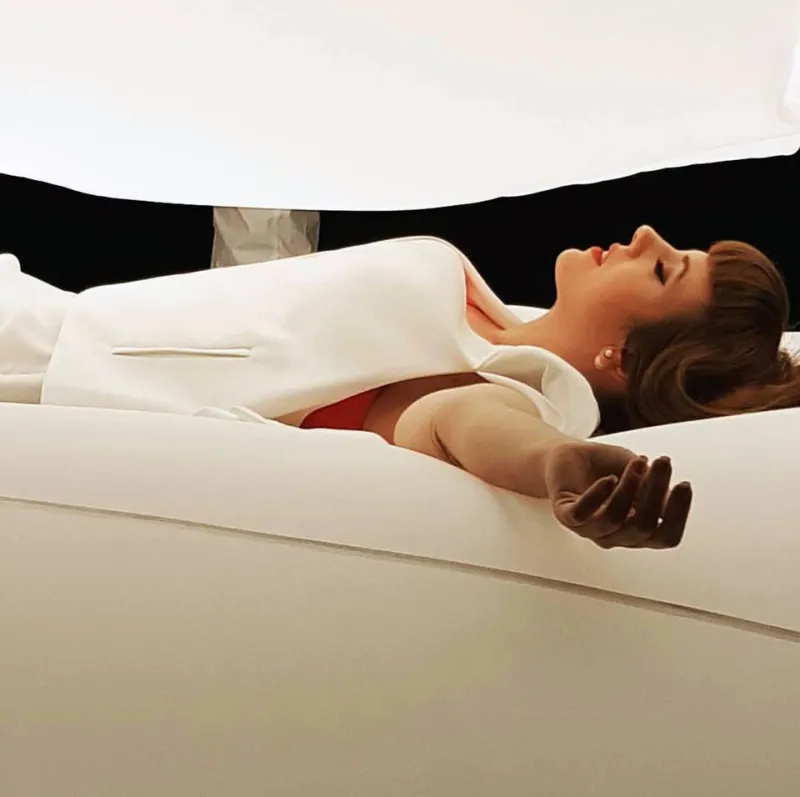
Photo: ArtistAmyKarle1, CC BY-SA 4.0, via Wikimedia Commons
The Architecture of Forgetting: When Neuroscientists and Installation Artists Build Spaces That Remember for Us — Badly
The ancient Romans had a technique for remembering long speeches. They would mentally place each argument inside a room of an imagined building — a doorway, a column, a window ledge — and then walk through that building in the mind's eye during delivery, retrieving each idea from its assigned location. They called this the method of loci. We call it, more poetically, the memory palace.
The palace, however, has always been a fiction. Memory does not store information the way a building stores furniture, intact and retrievable in its original form. It reconstructs. It edits. It confabulates with breathtaking confidence. What we experience as remembering is, neurologically speaking, closer to an act of creative writing than to the playback of a recording.
A growing number of artists and cognitive scientists, working in deliberate collaboration, are now building spaces that make that truth physically inhabitable.
Where the Lab Meets the Gallery
The partnerships driving this work are not casual. They typically involve sustained dialogue between neuroscientists specializing in memory encoding and retrieval — researchers familiar with the work of Elizabeth Loftus on false memory, or with the reconsolidation theory developed in part by Karim Nader — and installation artists with a background in spatial experience design. The scientists bring the mechanism; the artists bring the phenomenology.
The installations that emerge from these collaborations share certain formal strategies. They frequently manipulate light in ways that destabilize spatial orientation. They use sound design to create what researchers call temporal displacement — the subtle sense that an event is simultaneously past and present. They often incorporate elements that change between a visitor's entry and exit, exploiting the brain's tendency to update memories upon each retrieval rather than simply re-accessing an unchanged original.
This last element is particularly significant. One of the most disquieting findings in contemporary memory science is that the act of remembering is not passive. Each time we recall an event, we briefly return it to a malleable state before reconsolidating it — and in that window, it is susceptible to modification. We do not remember events. We remember the last time we remembered them. The installations that exploit this mechanism are not merely illustrating a scientific finding. They are engineering the experience of it.
The Distortion Chamber
Imagine entering a room that appears, on first impression, to be a domestic interior: a table, chairs, a window with light filtering through. You spend perhaps ten minutes there, absorbing details. You then pass through a corridor — disorienting, deliberately featureless — and emerge into a space where you are asked, informally, to describe what you saw.
Most visitors report the room with confidence. Many report details that were not present. Some report the absence of details that were. When they return to the original room for a second look, the discrepancies are not abstract. They are right there, on the table, in the window, in the arrangement of chairs that was never quite what anyone said it was.
This structure, variations of which have appeared in experimental exhibition spaces from the Massachusetts Museum of Contemporary Art to smaller project spaces in the Bay Area, is not designed to humiliate. It is designed to produce genuine epistemic humility — the visceral, first-person recognition that memory is not testimony. It is interpretation.
Loftus, Proust, and the Unreliable Archive
Elizabeth Loftus spent decades demonstrating, through rigorous experimental work, that human memory is alarmingly susceptible to post-event suggestion. Her research showed that witnesses to the same event could be led, through subtly leading questions, to remember details they never observed — and to report those false memories with the same confidence as accurate ones. The implications for eyewitness testimony in legal proceedings were profound and remain contested.
But there is a parallel tradition in art and literature that arrived at similar conclusions through entirely different means. Proust's great project in In Search of Lost Time was, among other things, an investigation into the unreliability of voluntary memory and the strange authority of involuntary recollection — the madeleine's taste unlocking something that deliberate effort could not. The neuroscientists and the novelist were mapping the same territory from opposite directions.
The installations now emerging from art-science collaborations occupy a third position: neither purely empirical nor purely phenomenological, but designed to collapse the distance between the two. A visitor who has spent forty minutes in a carefully engineered space of forgetting has not read a paper on reconsolidation theory. They have, in some meaningful sense, lived it.
What the Body Knows That the Mind Denies
One of the more philosophically interesting aspects of these collaborative projects is the role of the body as a site of memory — and of memory failure. Cognitive neuroscience has increasingly moved away from a purely cortical model of memory toward a more distributed understanding that implicates the body's sensory and motor systems. We remember, in part, with our muscles, our skin, our sense of spatial orientation.
Installation artists, working intuitively with this idea for decades before the science caught up, have long understood that a space can carry emotional memory in ways a text or image cannot. The smell of a particular floor wax, the angle of afternoon light through a specific kind of window, the sound of footsteps on a particular material — these sensory signatures can unlock recollection with a force that deliberate recall rarely achieves.
The most sophisticated of the current collaborations are exploiting this precisely. They are not simply building visually disorienting spaces. They are engineering multisensory environments in which the body's memory systems are activated and then subtly contradicted, creating a productive friction between what the senses report and what the mind believes it knows.
The Ethics of Engineered Disorientation
Not everyone is comfortable with this. Critics of the genre raise legitimate questions about the ethics of deliberately inducing false memories or spatial confusion in gallery visitors who may not fully understand what they are consenting to. The line between an immersive art experience and a psychological experiment is not always clearly marked.
Proponents respond that the disorientation is temporary, the insights are genuine, and the alternative — leaving audiences with their unexamined confidence in the accuracy of their own recollections — carries its own costs. A society that better understands the constructedness of memory is, the argument goes, better equipped to navigate questions of testimony, identity, and historical truth.
This is not a small claim. But then, the best art-science collaborations have never made small claims. They have always insisted that the questions raised at the intersection of empirical inquiry and aesthetic experience are among the most consequential available to us.
The memory palace was always a metaphor. These artists and scientists are building its ruin — and inviting us to walk through it, and to notice, with appropriate unease, how much we think we recognize.