Painted Sound: How Synesthetic Artists Translate the Invisible into the Visible
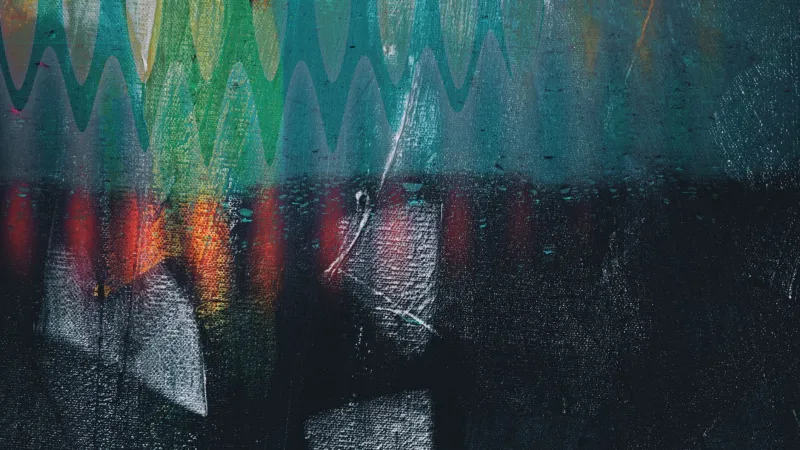
Imagine sitting in a concert hall and watching Beethoven's Fifth Symphony bloom across your field of vision as a cascade of deep indigo and fractured gold. For most of us, that remains a poetic metaphor. For an estimated three to five percent of the population, it is simply Tuesday.
Synesthesia — derived from the Greek words for "together" and "sensation" — is a neurological condition in which the stimulation of one sense automatically and involuntarily triggers an experience in another. The most commonly documented form, chromesthesia, causes individuals to perceive sounds as colors. Other variants link numbers to personalities, words to flavors, or touch to spatial geometries. What makes synesthesia especially compelling to the cultural observer is not merely its scientific strangeness but the disproportionate number of celebrated artists who have claimed it as a defining feature of their inner lives.
The Neuroscience of Cross-Wired Perception
Scientists have long debated the precise mechanisms underlying synesthesia, and the conversation remains productively unresolved. The prevailing hypothesis points to atypical cross-activation between adjacent or functionally connected regions of the brain. In chromesthetes, neuroimaging studies have consistently shown activation of the visual cortex — specifically areas responsible for color processing — when subjects listen to music, even in the complete absence of visual stimuli.
Research conducted at institutions such as MIT and Caltech has further suggested that synesthetic associations are not random. They tend to be stable across a lifetime, highly consistent within an individual, and often carry an emotional valence that non-synesthetic people simply do not experience when processing the same stimulus. A particular musical key does not just appear as a color; it appears as a specific color, every time, with the same emotional weight attached.
This consistency is what distinguishes synesthesia from imagination or metaphor. When the composer Franz Liszt reportedly instructed his orchestra to play a passage "a little bluer," he was not speaking in abstract poetic terms. He was issuing a precise technical instruction grounded in a perceptual reality his musicians could not access.
Kandinsky and the Grammar of Invisible Color
No figure in art history has more thoroughly theorized the relationship between sound and color than Wassily Kandinsky. The Russian-born painter, working in Munich and later at the Bauhaus in Germany before emigrating to France, produced not only his iconic abstract canvases but also a dense theoretical treatise, Concerning the Spiritual in Art (1911), in which he mapped specific colors to musical instruments, emotional states, and spiritual conditions with the precision of a scientist cataloguing specimens.
Kandinsky described yellow as the color of the trumpet — sharp, aggressive, unsettling. Blue, he wrote, was the cello: deep, receding, contemplative. Whether or not Kandinsky possessed clinical synesthesia remains a matter of scholarly debate, but his visual vocabulary was unmistakably organized around the logic of cross-sensory translation. His paintings were not representations of the visible world; they were transcriptions of an interior one, built from a grammar that merged acoustics and optics into a single language.
His contemporary, the composer Alexander Scriabin, went further still. Scriabin designed a "color organ" — a device intended to project colored light onto a concert hall screen in synchrony with musical performances. His Prometheus: The Poem of Fire (1910) included a part for this instrument, called the luce, making him one of the earliest artists to attempt a technologically mediated synesthetic experience for an audience that did not share his condition.
The Contemporary Studio: Digital Tools and Sensory Translation
In the twenty-first century, the synesthetic impulse has found new instruments. Contemporary digital artists in cities from Brooklyn to Los Angeles are building immersive environments in which sound is rendered as shifting light fields, musical frequencies are mapped to color spectra in real time, and audiences are invited — however imperfectly — into an approximation of the synesthetic experience.
Artists working within the broader field of audiovisual performance, sometimes called "live cinema" or "VJing," have developed sophisticated software that translates audio frequencies into visual parameters: pitch controls hue, amplitude governs saturation, rhythm drives the pace of geometric transformation. These tools do not replicate synesthesia with neurological fidelity, but they create a shared perceptual bridge — a space where the synesthetic artist's private experience becomes, however partially, a public one.
Installation artists such as Marcia Smilack — an American photographer who describes herself as a reflectionist and has written extensively about her synesthetic practice — have documented how the visual texture of water can trigger auditory sensations, which she then uses as a compositional guide. Her work raises a question that is as much philosophical as scientific: if the artwork originates in a sensory experience unavailable to most viewers, does the resulting piece carry a meaning that is fundamentally untranslatable?
Art as a Laboratory for Perception
What synesthetic artists ultimately offer is not merely beautiful work — though the work is often that — but a challenge to the assumption that human perception is uniform. The sciences of cognitive neurology and perceptual psychology have long understood that the brain does not passively receive the world; it actively constructs it. Synesthesia makes that construction process visible in unusually dramatic ways.
For audiences at Picasso & Einstein, where art and science are understood not as opposing disciplines but as parallel inquiries into the nature of reality, the synesthetic artist occupies a particularly instructive position. These individuals do not choose their perceptual framework any more than Einstein chose the speed of light or Picasso chose the emotional charge of the color blue. They work with the materials their nervous systems provide, and in doing so, they illuminate the degree to which all artistic perception — synesthetic or not — involves a translation between inner experience and outer form.
The synesthetic studio is, in this sense, less an anomaly than an intensification of what every artist already does: it takes the invisible and insists, with technical rigor and imaginative courage, on making it seen.
Toward a More Porous Sensory World
As neuroscience continues to refine its understanding of synesthesia — distinguishing between projective synesthetes, who perceive their secondary sensations externally, and associative synesthetes, who experience them internally — the artistic community is likely to develop increasingly sophisticated ways of engaging with these findings. Already, music schools, art therapy programs, and design departments at universities across the country are incorporating cross-sensory thinking into their curricula.
The broader cultural implication is significant. If perception is not a fixed, universal channel but a variable, individual construction, then the act of making art — and the act of experiencing it — is always, in some measure, a negotiation between worlds. Synesthetic artists simply negotiate more openly, and with more colors in play.