Designing the Sublime: How Neuroscience Is Quietly Reshaping the American Museum Experience
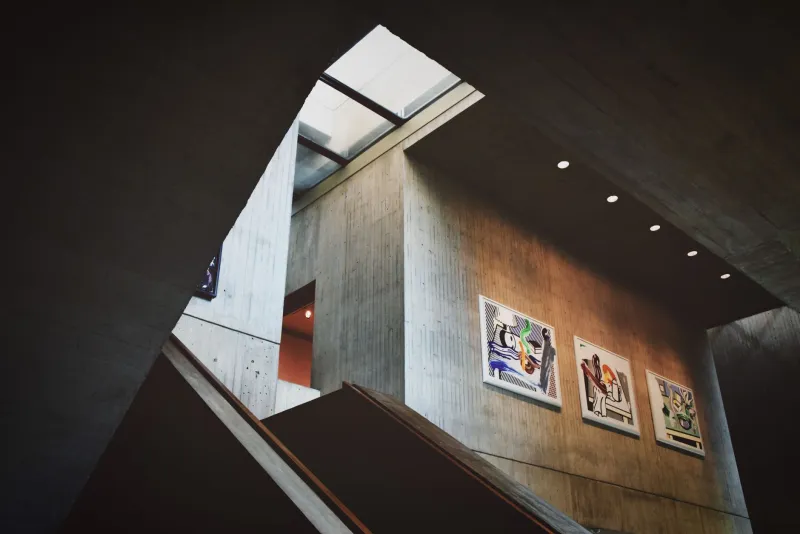
The Kimbell Art Museum in Fort Worth, Texas, has long been considered one of the finest museum buildings in the United States—not because of what it displays, but because of what its architecture does to the people moving through it. Louis Kahn's 1972 masterwork channels natural light through curved concrete vaults in a way that produces a quality of illumination unlike anything achievable through artificial means: soft, diffuse, slightly silver, and possessed of a peculiar capacity to make objects appear more real than they do in ordinary daylight. Visitors frequently describe feeling calmer inside the Kimbell than they expected to feel. They linger longer. They look more carefully. For decades, this was attributed to Kahn's genius—his intuitive understanding of how light and space interact with human perception. What was less understood, until relatively recently, was the precise neurological mechanism by which his intuitions were operating.
That gap between intuition and mechanism is now closing, and the consequences for American museum design are considerable.
The Cognitive Turn in Gallery Architecture
Over the past two decades, a field that might loosely be called neuroaesthetics has moved from the margins of academic psychology toward the center of a genuinely interdisciplinary conversation. Researchers including Semir Zeki at University College London and Anjan Chatterjee at the University of Pennsylvania have produced substantial bodies of work examining how the brain responds to visual art—which neural circuits activate during aesthetic experience, how attention is allocated across a canvas, what role emotional memory plays in the perception of beauty. This research was initially aimed at understanding art appreciation as a cognitive phenomenon. Its secondary application, increasingly recognized by architects and museum professionals, is the possibility of designing spaces that work with these neural tendencies rather than in ignorance of them.
The San Francisco Museum of Modern Art's major expansion, completed in 2016 by the Norwegian firm Snøhetta, offers a prominent American example of this sensibility at work. The building's architects conducted extensive consultations with curators about visitor flow, attention fatigue, and the psychological effect of ceiling height on perceived intimacy with individual works. The resulting structure varies its gallery proportions deliberately—large volumes for monumental works, compressed corridors that create anticipation before opening into reveal spaces, natural light modulated through diffusing panels to reduce the harshness that causes eye fatigue during extended viewing. These are not merely aesthetic choices. They reflect a considered understanding of how spatial experience shapes cognitive state.
Light, Sequence, and the Architecture of Attention
Among the variables that neuroaesthetics research has most clearly illuminated, light remains the most consequential. The human visual system evolved under natural illumination, and the brain responds differently to natural and artificial light in ways that have direct implications for how art is perceived. Natural light—or high-quality artificial light that mimics its spectral characteristics—has been shown to increase sustained attention and reduce the cognitive fatigue associated with prolonged museum visits. It also renders color more accurately, which matters enormously for work in which chromatic relationships carry interpretive weight.
Sequence and circulation pattern constitute a second domain of active design intervention. Research in environmental psychology has established that human beings experience environments narratively—that the order in which spaces are encountered shapes the emotional and cognitive state brought to each successive space. Museum designers are now applying this understanding with considerable sophistication. The recently renovated galleries at the Art Institute of Chicago have been reorganized not merely by historical period or geographic origin but with attention to what curators describe as emotional pacing: the deliberate alternation of intense and restful visual experiences to prevent the numbing effect—sometimes called museum fatigue—that reduces attentiveness in later portions of a visit.
The Metropolitan Museum of Art in New York has undertaken similar reconsiderations in its ongoing renovation programs, working with spatial designers to examine how the transition between the museum's encyclopedic collections might be managed to preserve rather than exhaust the visitor's capacity for genuine attention.
The Philosophical Complication
It would be intellectually dishonest to present this development without acknowledging its attendant tensions. The application of cognitive science to museum design raises a question that sits at the heart of the Picasso & Einstein project itself: when scientific methodology is brought to bear on aesthetic experience, what is gained, and what is at risk?
The concern, articulated with particular clarity by critics including the art historian James Elkins, is that the optimization of aesthetic encounter may subtly undermine the very quality that makes such encounters valuable. Art's power has always derived, in part, from its capacity to surprise—to produce responses that were not anticipated, in spaces that were not engineered to produce them. A gallery designed by neuroscientists to maximize emotional engagement is, in a sense, a controlled environment. And controlled environments, however benevolently conceived, are environments in which the possibility of genuinely unmanaged experience has been reduced.
This is not a trivial objection. The history of American art patronage includes numerous examples of institutional frameworks that, in attempting to make art more accessible or more impactful, have inadvertently smoothed away the roughness that gave particular works their force. The question of whether neuroscience-informed design represents a new version of this problem is one that the museum community has not yet resolved—and may not be able to resolve through further research alone.
Between Optimization and Openness
The most thoughtful practitioners working in this space are themselves alert to the paradox. Anne Massey, a design historian who has written extensively on the relationship between spatial experience and cultural institutions, argues that the goal of neuroaesthetically informed design should not be to produce predetermined emotional outcomes but to remove the obstacles—harsh lighting, disorienting circulation, acoustically overwhelming spaces—that prevent visitors from arriving at their own genuine responses. The distinction is between designing for openness and designing for a specific experience.
This framing suggests a productive middle ground: one in which scientific understanding of human perception is used not to engineer wonder but to clear the path toward it. A gallery that does not exhaust its visitors with fluorescent glare and labyrinthine wayfinding is a gallery in which the encounter between a person and a work of art can occur on something closer to its own terms.
Kahn appears to have understood this intuitively. The Kimbell does not tell its visitors how to feel. It simply creates conditions in which feeling—sustained, attentive, unforced—becomes possible. That neuroscience is now providing the vocabulary to explain what his intuition achieved does not diminish the achievement. It may, in fact, be the most honest collaboration between art and science currently available to us: not a merger, but a mutual illumination, each discipline revealing something about the world that the other, alone, could not see.