Picasso & Einstein Where Art Meets the Infinite

Picasso & Einstein

Where Art Meets the Infinite

Latest Articles

The Unseen Made Visible: How Scientific Imaging Rewired the Modern Artistic Eye
Art & Technology

The Unseen Made Visible: How Scientific Imaging Rewired the Modern Artistic Eye

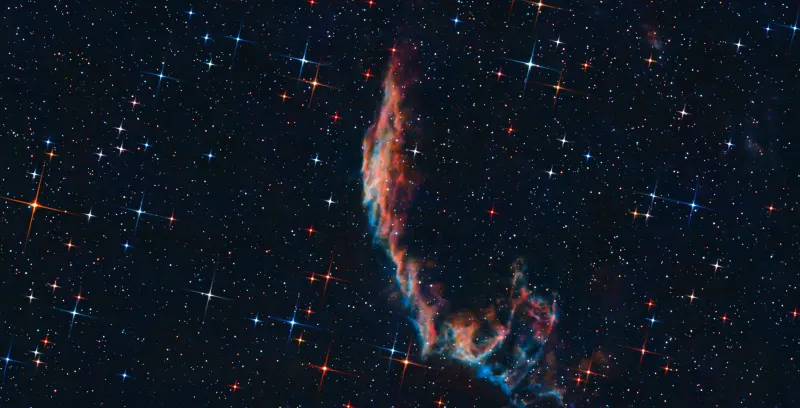
When the Hubble Space Telescope transmitted its first deep-field images in 1995, it did not merely expand humanity's knowledge of the cosmos—it handed artists an entirely new visual language. From thermal photography to particle collision renderings to electron microscopy, scientific imaging technologies have quietly become one of the most transformative forces in contemporary aesthetics. This article traces how the invisible world revealed by instruments has reshaped what artists see, what they

The Beautiful Lie: Separating Mathematical Myth from Aesthetic Reality in the Golden Ratio
Science & Culture

The Beautiful Lie: Separating Mathematical Myth from Aesthetic Reality in the Golden Ratio

For centuries, the golden ratio—approximately 1.618—has been celebrated as nature's secret formula for beauty, a mathematical constant supposedly embedded in the Parthenon, the Mona Lisa, and the human face. But a closer examination of the historical and scientific evidence reveals a far messier truth: much of what we believe about phi is romantic mythology, constructed after the fact by a culture desperate to prove that beauty and mathematics are one and the same. The story of how this misconce

When the Machine Picks Up the Brush: Rethinking Creativity in the Age of Generative AI
Art & Technology

When the Machine Picks Up the Brush: Rethinking Creativity in the Age of Generative AI

Generative AI tools like DALL-E and Midjourney are producing images of startling beauty and conceptual depth—yet the question of whether a machine can truly *create* remains fiercely contested. As artists, neuroscientists, and philosophers weigh in, we find ourselves confronting a definition of creativity that may be far more fragile than we imagined. The answer, it turns out, says as much about us as it does about the algorithms.